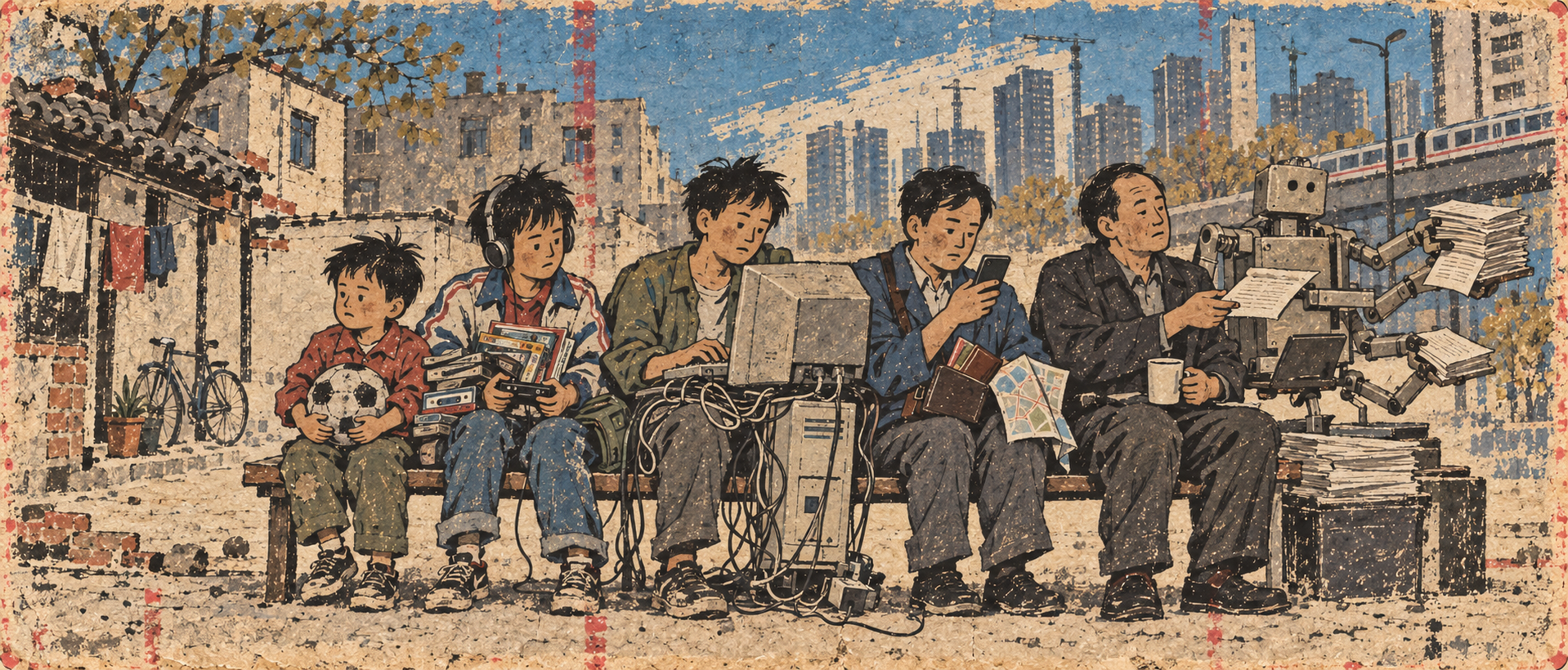
Looking back at the past forty years for China’s post-80s generation, what strikes me is how several completely different kinds of life have been packed together.
When we were children, daily life still carried the residue of the planned economy. Material goods were scarce, and in many places everyday life was not far removed from an agricultural society. Then came rapid industrialisation, a flood of imported products, personal computers, the internet, smartphones, the mobile internet and artificial intelligence.
In Western countries, these changes were spread across decades, centuries, sometimes even several centuries. In China, they were compressed and ended up inside the experience of a single generation. I find that extraordinary.
From the 1980s to the Early 1990s: Everyday Life Had Almost Nothing to Do with Electronics
My clearest memory of childhood is how plain life was.
Society still had a strong planned-economy character, and the range of manufactured goods an ordinary person might encounter was limited. For many people, daily life was still quite close to an agricultural way of living. When I say it was plain, I mean there simply was not much stuff.
Children’s entertainment had almost nothing to do with electronics. We kicked a ball around, ran about outside, or found any old object and turned it into a game that could last half a day. There were no electronic devices to play with, and nobody thought this was unusual. Everyone around us lived the same way.
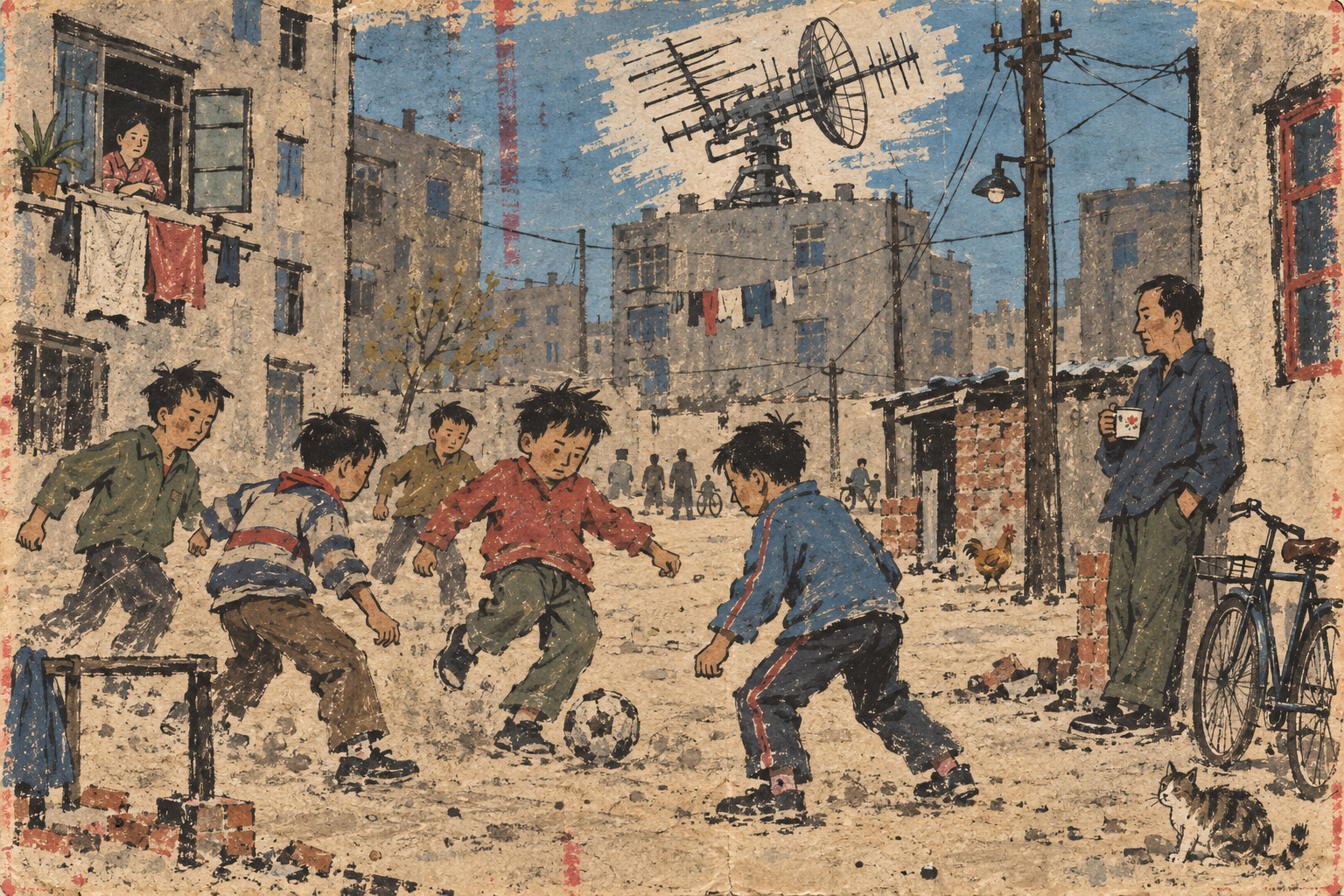
Information moved slowly too. The world did not rush into your face and refresh itself every few seconds. The boundaries of life were small, and today did not look dramatically different from yesterday. Looking back now, it feels almost like the life of another species.
The 1990s: Suddenly There Was Stuff Everywhere
Reform and opening had begun earlier, of course. But after Deng Xiaoping’s southern tour in 1992, marketisation and industrialisation visibly accelerated. For ordinary people, the most immediate change was that shops suddenly had far more things in them.
New products appeared with astonishing density. It was as though a door that had always been shut had suddenly opened, and everything rushed in at once.
Japanese products were especially emblematic of the 1990s. Game consoles, anime and all sorts of electronic devices we had never seen before shaped the childhood and adolescence of an entire generation.
The cultural impact was just as strong. Music, films and television from Hong Kong and Taiwan arrived all at once. Much of what we listened to and watched, and many of the stars we liked, came from there. Some of it was excellent and plenty of it was shoddy, but who cared at the time? A world that had been fairly monotonous suddenly became loud and colourful. We watched first and worried about quality later.
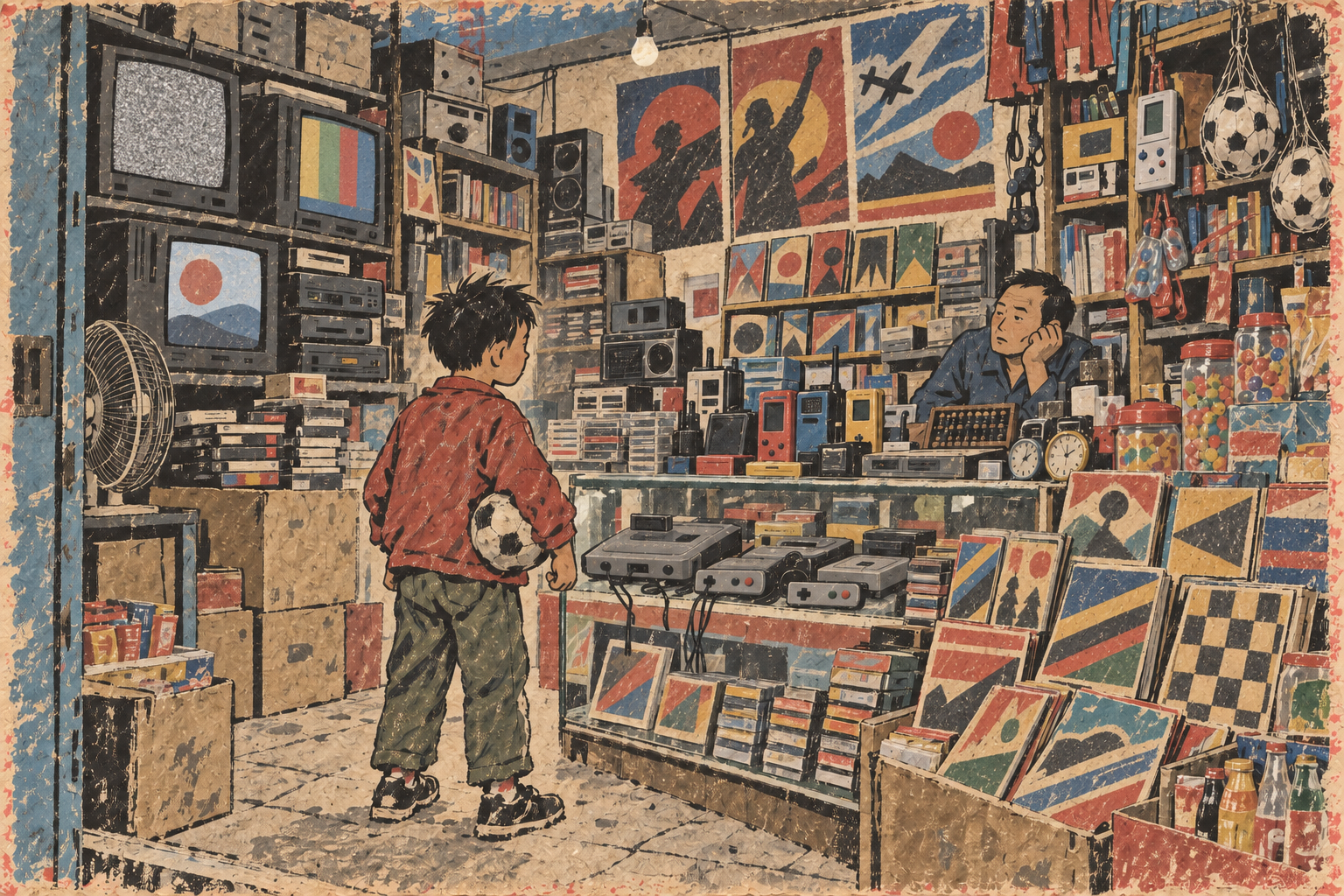
This was probably the first time I felt how quickly the world could change, overturning an entire familiar way of life in a remarkably short period.
The New Century: There Was an Entire World Behind the Computer
China joined the WTO in 2001. To an ordinary person, it felt as though the country had suddenly caught up with the pace of the rest of the world.
In my memory, WTO membership, personal computers and the internet all overlap. On one side, things made in China were entering the whole world. On the other, information from the whole world was entering ordinary people’s computers.
Personal computers gradually found their way into homes, and the internet went from a vaguely mysterious term to something people encountered every day. Sitting down at a computer then, you had the feeling that an enormous world existed somewhere behind that machine. People born into today’s networked life may find that feeling hard to understand. The internet is now like water or electricity: most of the time we barely notice it is there.
The computer-era internet was slow and constantly produced baffling problems, but it gave you a powerful sense of opening. Before that, most information had been arranged for you. You watched whatever the television station chose to broadcast. Once the internet appeared, you could wander around for yourself, look for things, and follow one link into somewhere you had not known existed.
Plenty of people struggled with the technology for hours only to play a game. That is often how technology enters ordinary life.
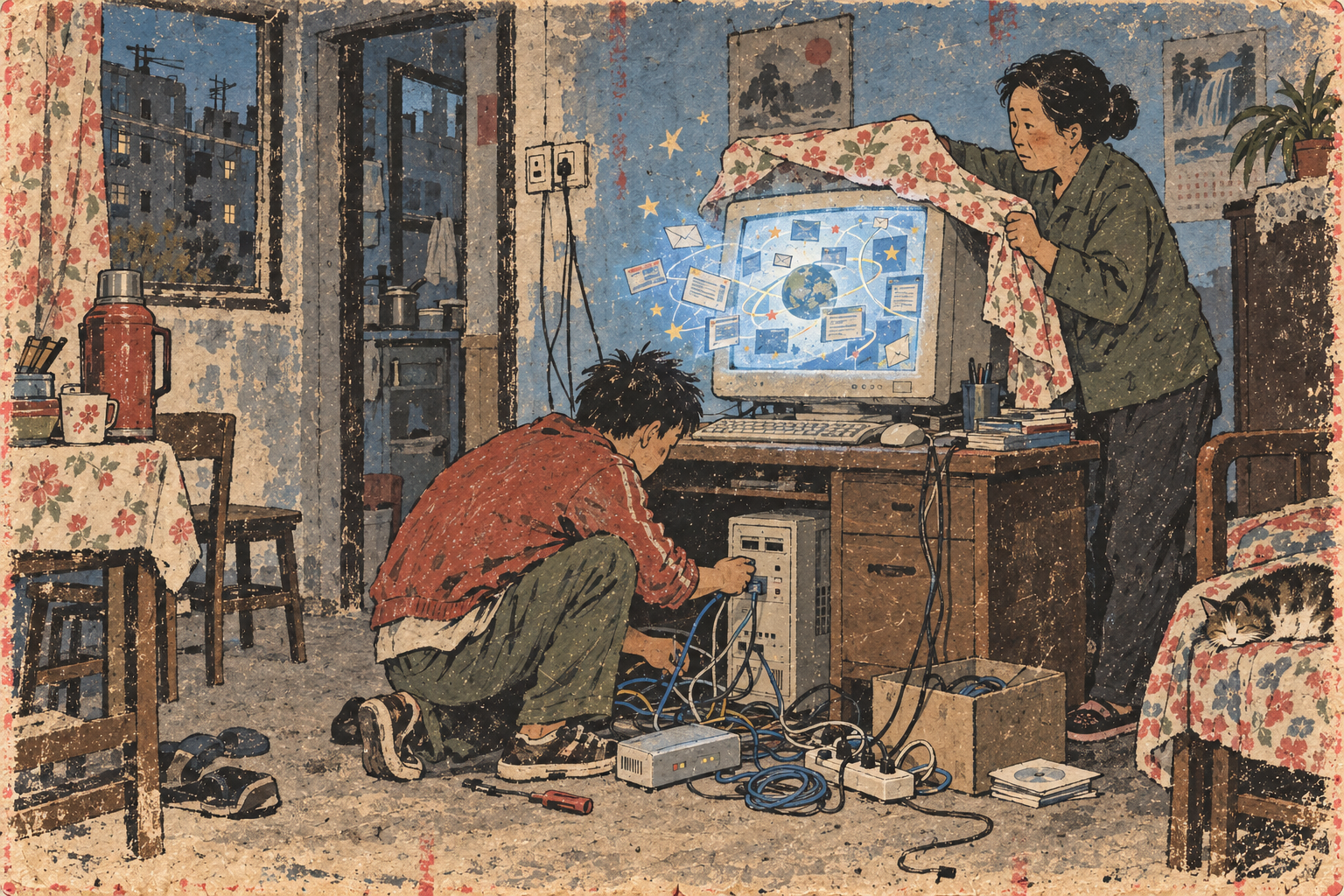
The flood of products in the 1990s and the flood of information in the 2000s were not very far apart. Before we had properly adjusted to the first upheaval, the second had already begun.
Around 2015: Everything Was Stuffed into the Phone
Then came the mobile internet.
By around 2015, it had become part of ordinary life. Smartphones, WeChat and an endless succession of apps took things that had once been scattered across different places and stuffed them all into one small screen.
In the computer era, going online was still a distinct activity. You sat down, turned on the computer, and then entered the network. Once smartphones arrived, people were online all the time. Conversation, news, shopping and entertainment were all inside the phone. Eventually, so was money.
At first it simply felt convenient, almost absurdly convenient. The phone soon became a basic piece of life. Lose it and your wallet, map, address book and half your brain seemed to disappear together.
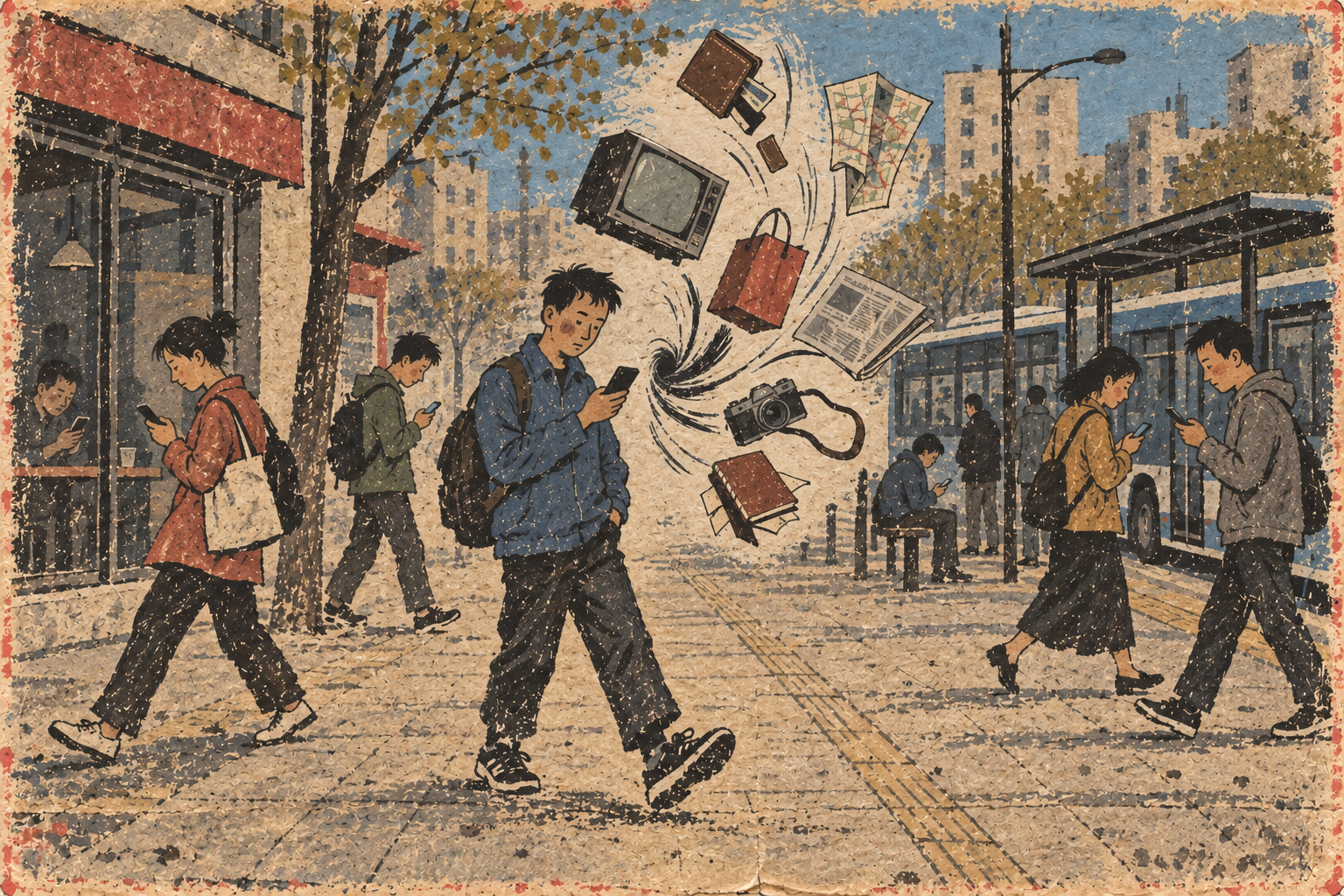
We adapted extremely quickly. Someone whose childhood had contained no electronic entertainment at all could reach their thirties, check a phone countless times a day, and regard this as perfectly normal.
After 2023: Now the Machine Talks Back
ChatGPT appeared at the end of 2022. But in my own experience, artificial intelligence did not begin to have a practical effect until roughly 2023 and 2024. At first, most of us were watching from the sidelines. It was intriguing that the thing could hold a conversation and produce writing that looked plausible. Only later did it begin to enter actual work and daily life.
Game consoles took over part of our entertainment. Computers and the internet changed our relationship with information. Phones became the gateway to almost everything. AI, however, is beginning to touch work we used to assume only people could do: writing, programming, research, analysis, organising information, even taking someone’s jumble of half-formed ideas and pushing them further.
I now use AI to write code, conduct research, build software for myself and my family, and organise photographs and videos accumulated over many years. Quite a few things I once merely thought about and then abandoned because the workload was too large can now actually be made.
The problems arrive with the possibilities. AI can do things very quickly, but it does not know what is worth doing. I used to get stuck on the question, “Can I make this?” Now the harder question is often, “If I can make all these things, what do I actually want to make?” The stronger the tool becomes, the more troublesome that question gets.
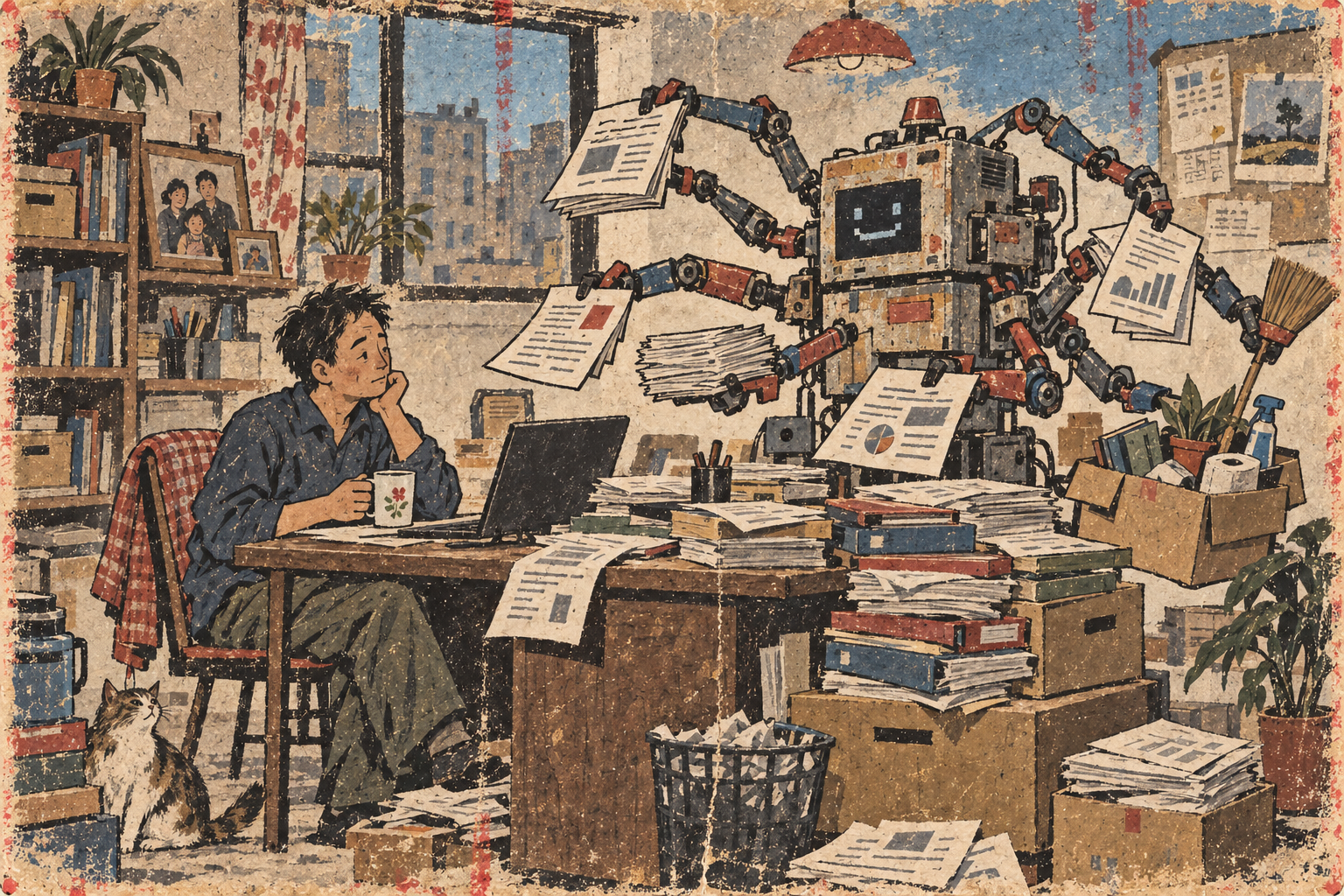
Someone whose childhood entertainment had nothing to do with electronics can now sit at a computer and ask an artificial intelligence to help with both work and life. Those two scenes belong to the same person, only forty years apart.
Time Compressed into a Single Generation
Western countries took a very long time to move from early industrialisation to the present. Industrial society, consumer society, personal computers, the internet and the mobile internet arrived one after another, with different generations adapting to different parts of the sequence. In the past forty years, China has been catching up with many of those stages at once. One transformation crowded straight into the next, and the post-80s generation happened to live through the whole sequence from the beginning.
Our childhood still retained the shape of an agricultural society. In adolescence we encountered rapid industrialisation and imported culture on a huge scale. We entered the internet as young adults, the mobile internet after thirty, and artificial intelligence at around forty. One stage had barely become history before the next one had started.
People in other countries have lived through rapid change too. But the speed, scale and compression of China’s transformation over these decades are unusual. For the post-80s generation, the lingering life of the planned economy, the industrialisation of the 1990s, the internet and artificial intelligence all belong to personal memory.
Written in a history book, these changes seem as though they ought to be far apart. In our memories, they sit one after another, with hardly any space between them.
I still find that extraordinary.