
Publication note, 13 September 2026: OpenAI has now released the relevant paper and a Lean formalisation. The essay below preserves the original text from 8 September. Its references to a proof that had not yet been published, and the concluding note of anticipation, reflect the information available at that time. Read the official announcement.
The Navier-Stokes equations, often shortened to NS equations, are regarded as a crown jewel of partial differential equations. They describe the motion of fluids. In three dimensions, whether smooth initial conditions always remain smooth or can develop a singularity in finite time remains one of mathematics' central problems.
What interests me most is the possibility of new methods emerging from a solution. They might help us understand the stability of complex systems, the mechanisms by which they lose control, and the limits of prediction and intervention in a new way.
First, a note on the state of the research. When this essay was checked on 8 September 2026, published results included constructions of finite-time blow-up for equations such as Euler and Boussinesq under smooth forcing. No public paper could yet be found for the reported proof of the standard Navier-Stokes problem by an internal OpenAI model. Publication and independent review were still required. 1
The papers already available nevertheless reveal a path worth watching. It introduces progressively finer-scale perturbations, uses the system's own instabilities to amplify them, and controls the errors rigorously so that the forcing remains smooth even as the gradient of the solution continues to grow.
One ingenious feature is the use of special structures that cancel some nonlinear interactions. This turns complicated local dynamics into ordinary differential equations that can be analysed. This multiscale approach has already been developed across several fluid equations. 2
This is precisely where cross-disciplinary value may arise: a method for handling nonlinear feedback and fine-scale change may unlock problems in other equations.
Finance is one field that deserves serious investigation.
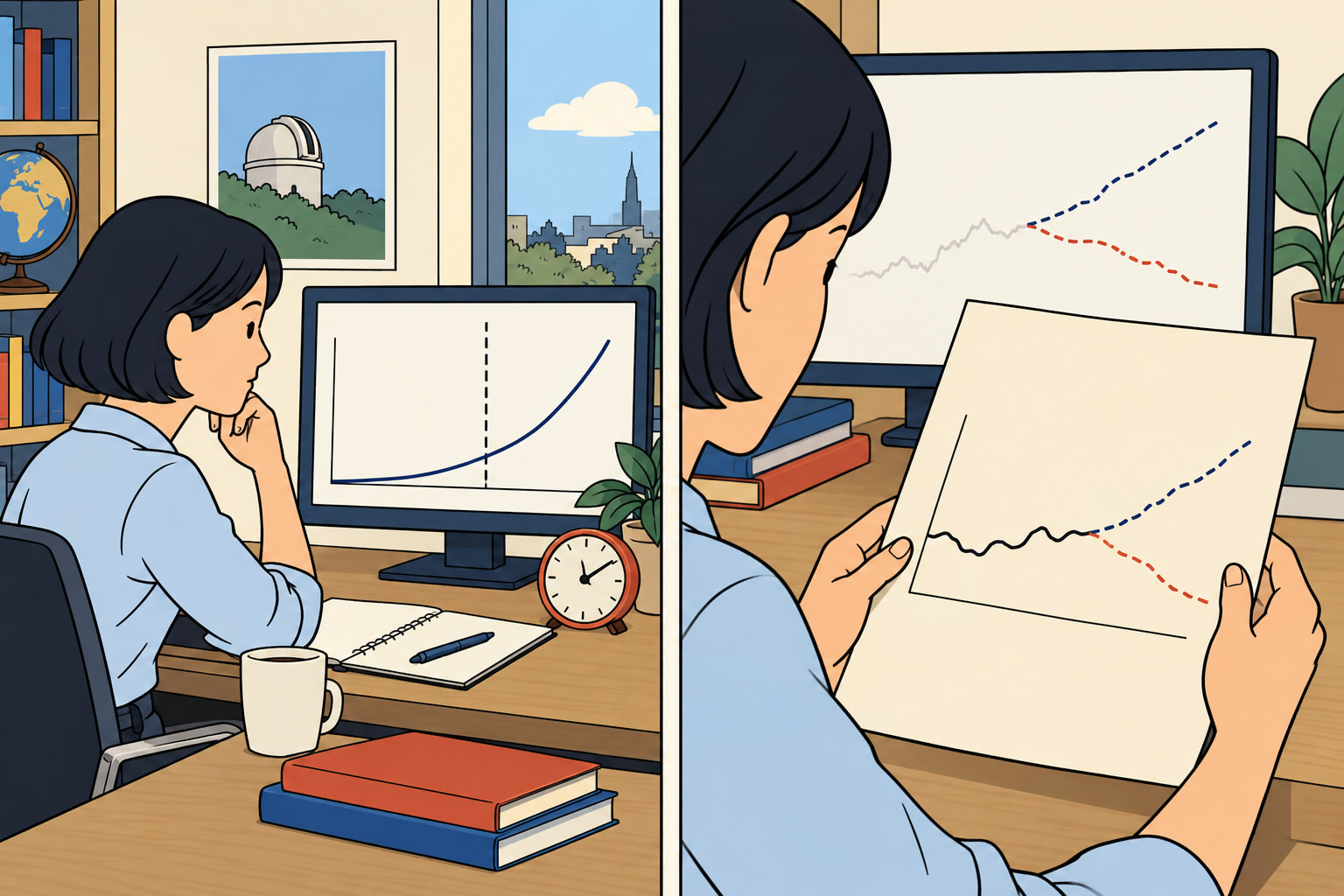
Consider an American option. Pricing it requires determining when early exercise is optimal, which produces a free boundary that changes with the surrounding conditions. Once transaction costs, liquidity and market feedback enter the picture, the pricing equation may also become nonlinear. Research on perpetual American put options has even allowed volatility to depend on the second derivative of the option price, the quantity associated with Gamma. 3
This raises a worthwhile question. Could new mathematical tools produce sharper analysis of price sensitivity, exercise boundaries and the conditions under which feedback becomes amplified? If so, pricing, hedging and risk management could all benefit. Any ability to predict real markets would still have to be tested jointly against models and data.
A second and more imaginative direction is plasma control in nuclear fusion.
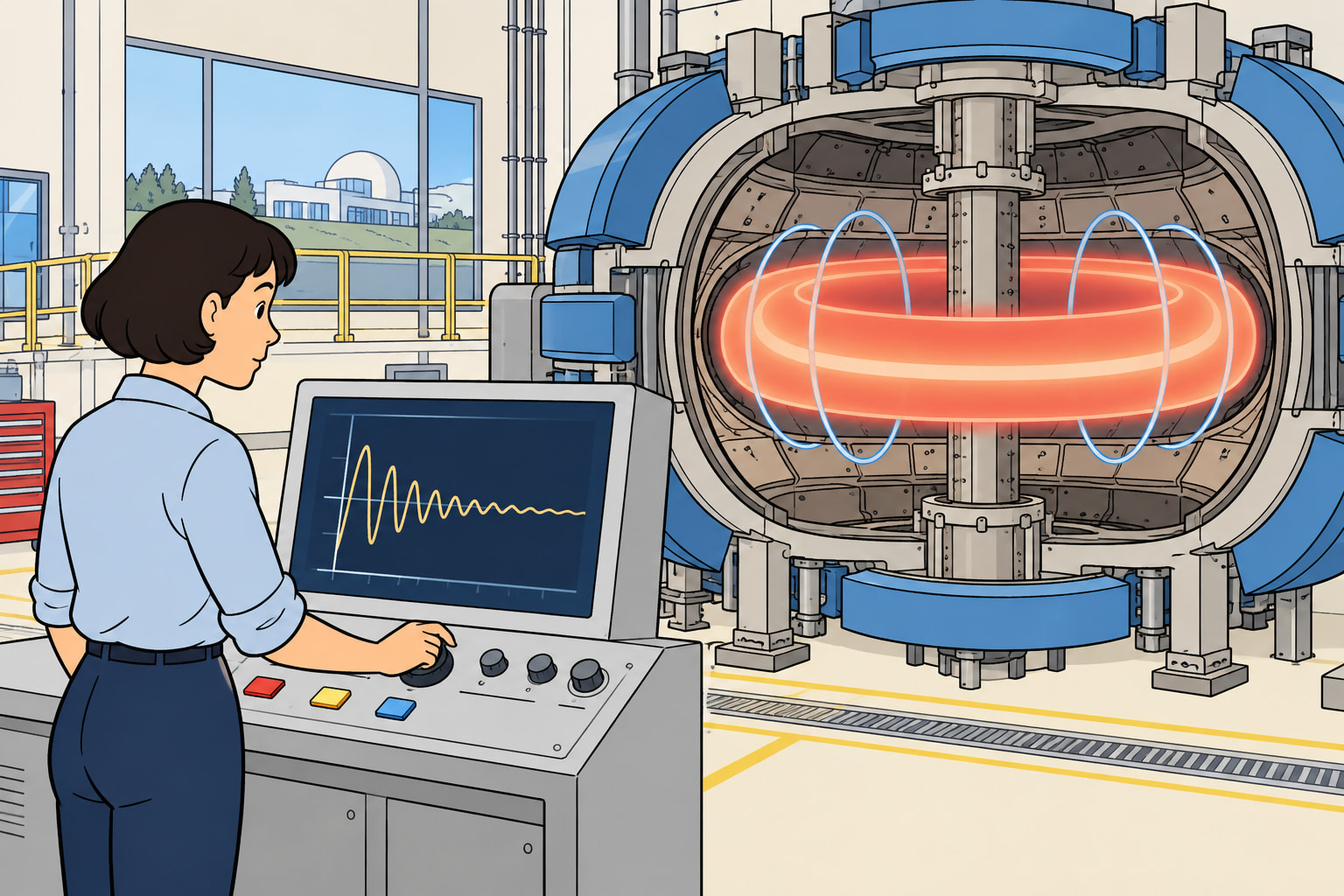
Fusion devices must maintain extremely hot plasma while avoiding instabilities that cause energy loss or terminate a discharge. The problem involves complex coupling in magnetohydrodynamics and particle kinetics. Experiments have already used AI to avoid tearing instabilities in plasma actively, showing that the sequence of identifying instability early and intervening in time has a practical basis in research. 4
If methods created through Navier-Stokes research can be extended to these models, and can describe more clearly how disturbances grow and when they can be suppressed, they may improve the prediction and control of stability. Their potential importance for energy technology deserves sustained attention.
Broader applications include aircraft and ship design, drag reduction, blood circulation and simulations of drug transport. If new theory can be turned into more reliable error estimates and computational methods, it may help engineers judge which results can be trusted and which local changes require finer computation.
Work by Yu Deng, Zaher Hani and Xiao Ma on deriving fluid equations from particle systems adds another important end to the picture. Under specific conditions, they rigorously established a route from microscopic particle collisions to macroscopic fluid equations. 5
One line of work explains how macroscopic equations emerge. The other studies how those equations evolve and where they lose regularity. Advancing both may deepen our understanding of microscopic motion, macroscopic flow and the boundaries within which each description applies.
What is now most worth waiting for is how a proof of the standard Navier-Stokes problem handles the competition between viscous diffusion and nonlinear amplification. If it introduces new tools that can be used across equations, the effects of the breakthrough may extend into finance, energy and the life sciences.