For some time now, I have been revising my first full-length novel, I Misjudged You.
I spent three years conceiving the novel, then another year writing it. After that, I began revising it chapter by chapter: cleaning up the timeline, adjusting the narrative rhythm, cutting explanations that had run out of control, and returning details to their proper places when I had written them by instinct before understanding what they were doing.
The first four parts have now completed that close revision. I am ready for the novel to meet its first readers.
Beginning in Tianjin in 1997
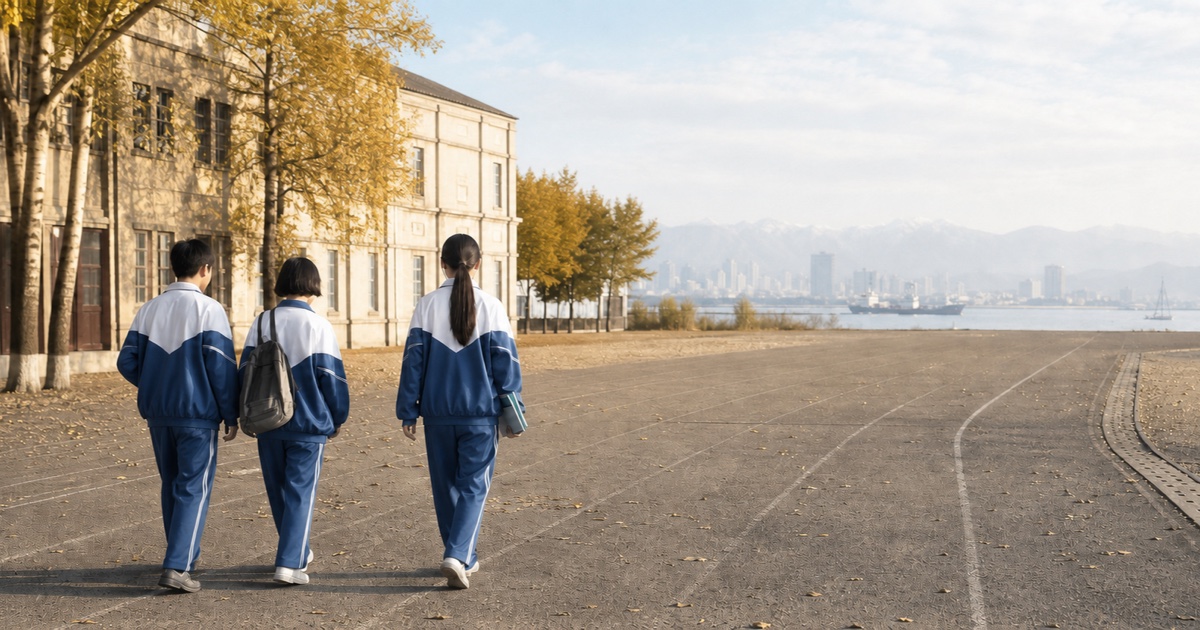
The story begins at a school in Tianjin in 1997. Gu Wan, Li Chu and Su Qinghe are still young. They believe every exam has a correct answer, that a relationship has a beginning and an end that can be clearly separated, and that words left unsaid have no consequences.
Later, they leave school and enter a world much wider than youth. Finance, technology and the movement of an era change their lives. Marriage and family redistribute everyone’s place. Illness, distant journeys and chance encounters repeatedly interrupt the old plans. They travel towards more than a handful of cities. As the geographical world opens, capital, academia, art, medicine and ordinary daily life each form a world of their own.
The point of view will pass into more hands
As an adult, Shen Zhiwei sees Li Chu anew when they meet again. Ye Weiyang opens another timeline through language, the body and distance. Liu Min brings painting, marriage and ordinary life into the story. In his consulting room, Chen Shu confronts someone who refuses every easy definition. Later, Lao Zhao, Kubao and Liuye appear, and the story leaves conference rooms and lakeside houses for drinking tables, card games and old friends.
They do not queue around one protagonist, and none of them exists to provide an answer for someone else. Each has a life history, and things they cherish, misunderstand and lose. A child, a lover, a doctor, an old friend, even someone who appears only briefly, can change how the reader judges the past.
A letter reaches a different reader many years later. An old photograph changes the weight of one moment during an escape. Different people read the same diary as entirely different things. Seen from another direction, the same event may no longer look like the same event at all.
At first it resembles a coming-of-age love story. That illusion matters, but Young Wanderers is only the first step in a nine-part structure.
The observer keeps changing, and so do time and distance. The same past is told again. Details shift. Judgements that once felt secure begin to loosen. You may think you understand Gu Wan, only to meet her again in someone else’s memory. You may think Li Chu is the answer, then discover that he too has always been watched and misread.
I wanted to write about how we ever know another person
A person cannot easily be explained from within, once and for all. We know them more often by the way they love and wound others, by how an era and a relationship change them, and by how they in turn change the people nearby. New evidence arrives and old judgements move. Time passes. The person being observed does not remain still, and neither does the observer.
The novel contains some of my thinking about logic, time and knowledge, but none of it is a barrier to reading. Every abstraction must first become a choice someone makes, a sentence swallowed back, or a letter sent or left unsent. The entrance is always a person.
Why call it I Misjudged You?
Because no one in the novel misjudges only once, and the author does not get to stand outside the problem. More importantly, readers keep forming judgements, only for later events to push them back to where they began.
In the prologue, Li Chu writes one sentence:
I mistook hope for evidence. For thirty years.
Perhaps the whole novel begins with that one mistake.
The serial will begin soon
I am ready to start the serial. The first stop remains Tianjin in 1997. The world has not yet opened fully before these people, and none of them knows what they will leave inside the lives of others.
On a first reading, you will probably take it for a story about youth, unspoken love and missed chances.
Read it that way first. Do not rush to believe you have seen everything.