Art is not a question waiting to be answered. It is more like a key frame into which the artist has condensed reality, emotion, thought, inspiration and context.
When people stand in front of a painting or sculpture, especially a work of modern art that they do not immediately understand, their first reaction is often: What exactly is this depicting? What is the artist trying to say?
We tend to assume that an answer is hidden behind the artwork. The work becomes a question, its surface becomes the wording, and the artist and the museum seem to possess the correct solution. Those who understand art can guess it; those who do not can only stand there, bewildered.
But I think a decisive moment in learning to appreciate art comes when we realise that art is not a question and that there is no single, definite answer waiting to be found.
Art is more like a key frame condensed by its creator.
Beginning with Resemblance
Along one important line in the development of art, the most immediate power of painting was its ability to reproduce reality. People marvelled at a person, an animal or a landscape rendered so convincingly that the real thing seemed to stand before them. The greater the resemblance, the more clearly the artist demonstrated an ability to observe and control line, light, shade and proportion.
The beetle in the photograph below offers a direct example. Dense lines describe the curve of its shell, its patterns and its smallest spots. We can almost feel, through the image, a surface that is hard, rough and faintly glossy. What we first appreciate here is the artist's ability to capture form and detail.
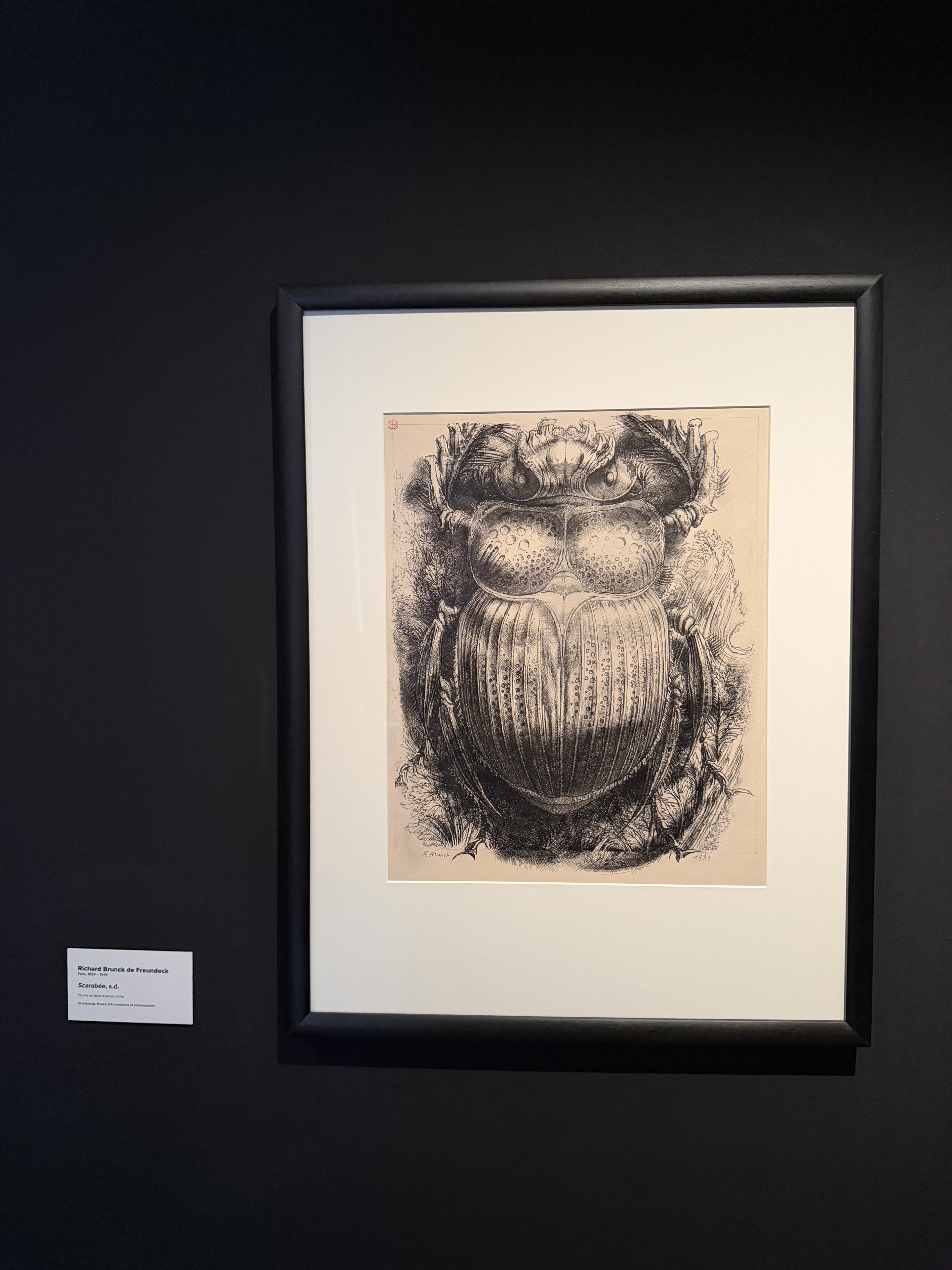
Yet this is already more than a mechanical copy of a beetle. The artist chose a frontal view and enlarged the creature until it almost fills the picture. Its strongly symmetrical structure makes it look like a face, a mask or a totem. Through selection, enlargement and reorganisation, the beetle in reality has become a condensed visual image.
Even in art that comes closest to "looking real", creation is never a matter of moving reality intact onto a surface. Reality is continuous and disorderly, filled with limitless information; a work of art has boundaries. The artist has to decide what to look at, what to retain, what to omit, and where to stop. That act of selection is where the key frame begins to take shape.
When the Manner of Painting Becomes Something We See
As painting developed, people gradually came to appreciate not only what had been painted, but how it had been painted.
The two landscapes below remain clearly recognisable. We can identify a riverbank, a road, trees, sky and fields. Yet neither picture accounts distinctly for every leaf or blade of grass. The brushstrokes remain visible on the surface. Reflections on water, the air of the sky and blurred trees in the distance no longer serve merely as the outlines of objects. They become the impression left by light at a particular moment.
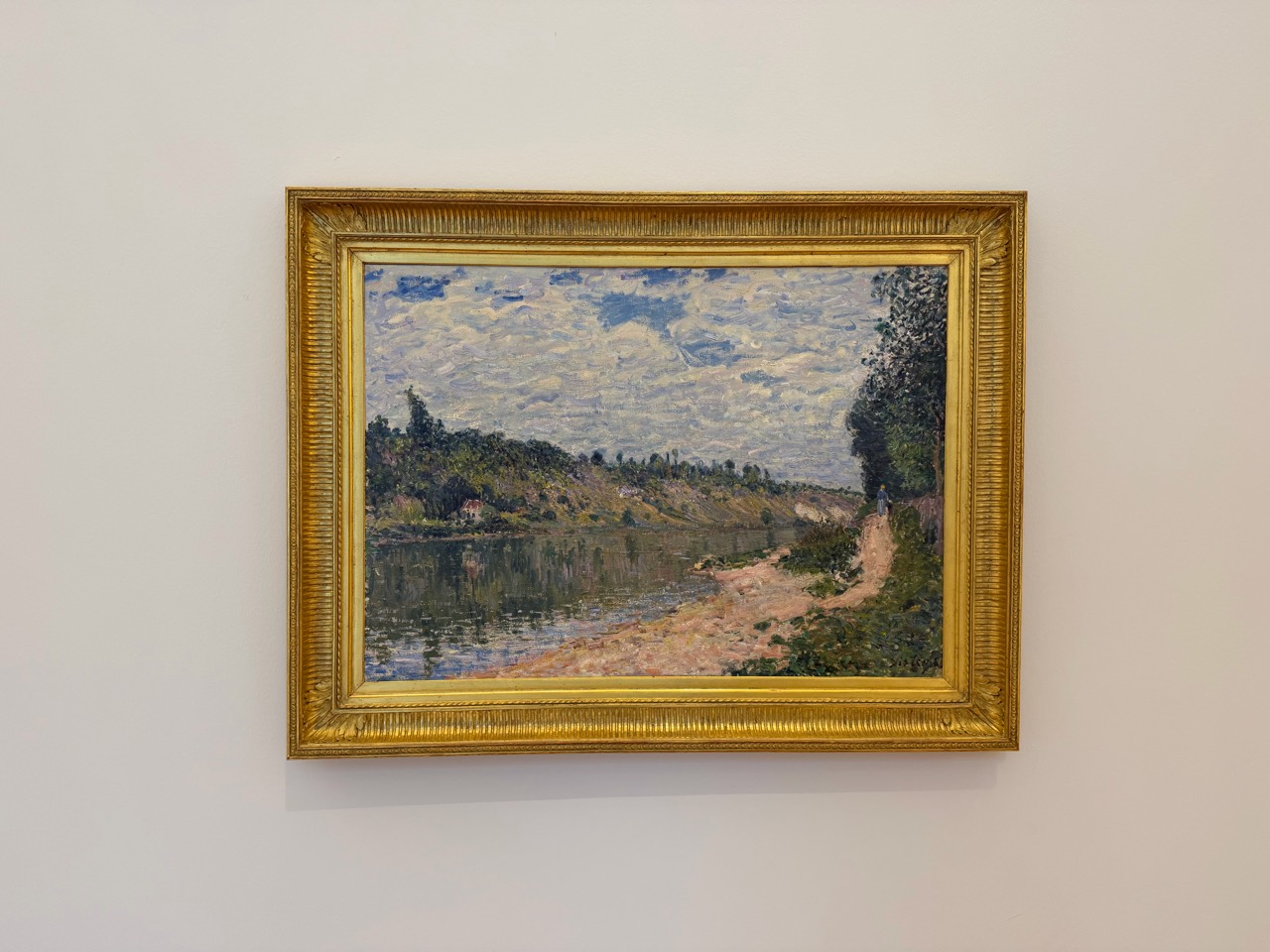
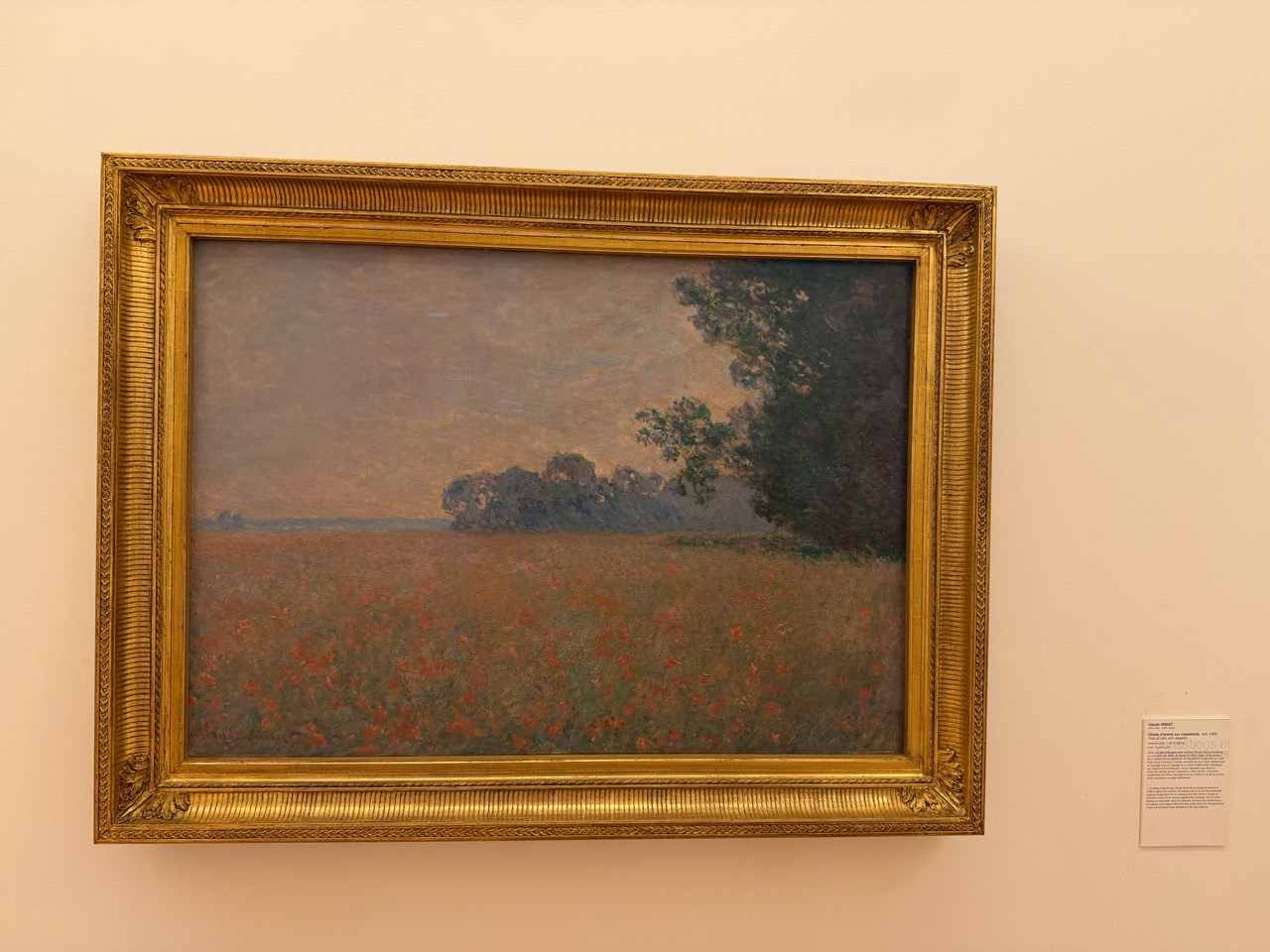
What has been condensed is no longer simply "there is a river here" or "there is a field here". The image also contains the way the artist saw the river, sky and distant light at that moment. The real landscape is only the starting point. What actually enters the painting is reality after it has passed through the artist's perception.
Another work still depicts recognisable people and a scene of labour, but the proportions of the figures, the colours, the trees and the space have all been deliberately simplified and rearranged. The artist no longer tries to turn the painting into a perfectly transparent window. Lines and colours take part in the narration. We see not only what these people are doing, but also the relationships among their bodies, the repetition of their movements, the colour of the ground and the rhythm of the scene as a whole.
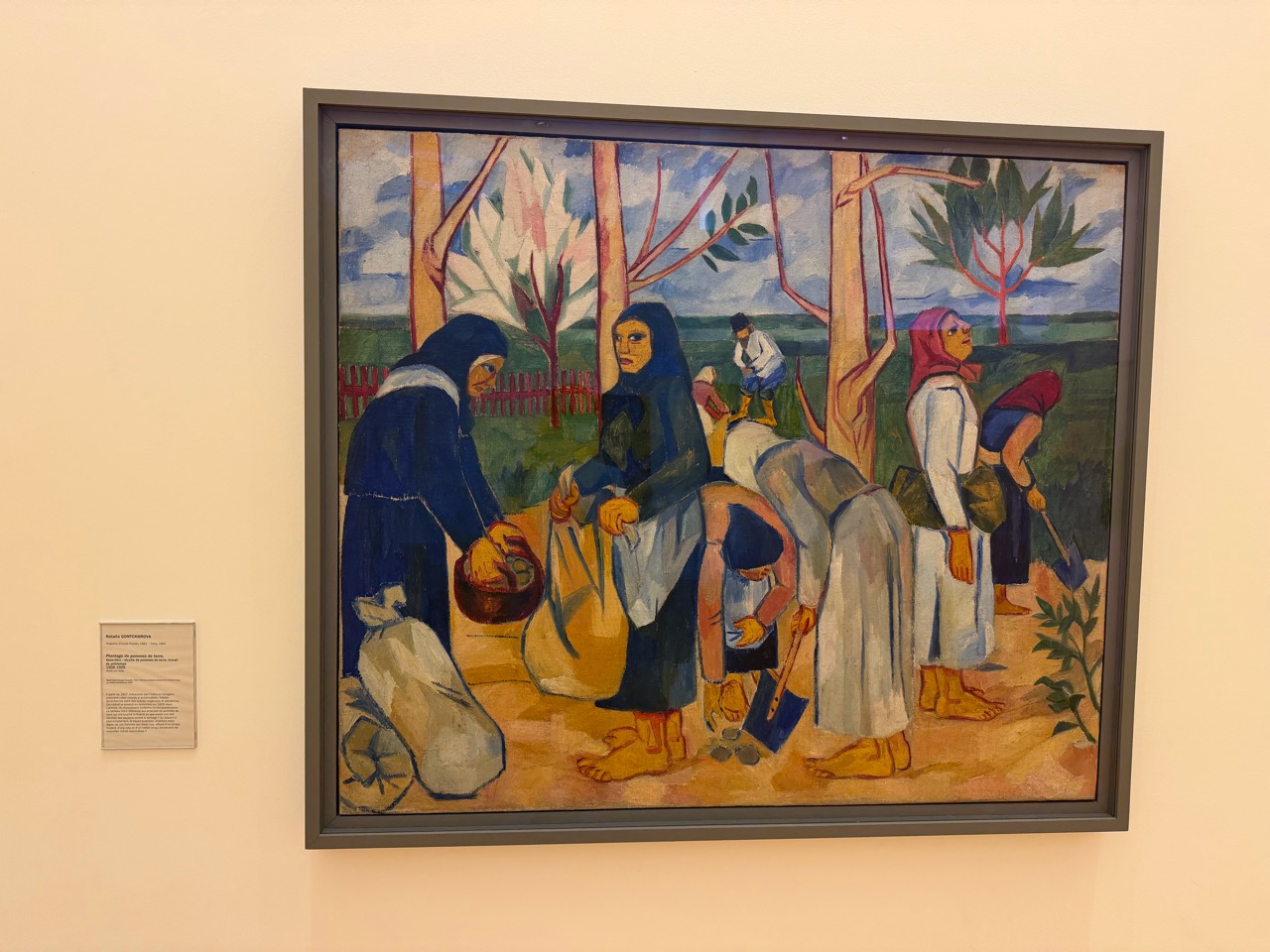
At this point, technique itself becomes an object of appreciation. We look not only at the subject, but at the way the artist turns that subject into a picture.
When Colour No Longer Has to Serve a Particular Object
One step further, art no longer has to depend on a particular person, tree or landscape.
Kupka's painting is composed mainly of large areas of red, yellow, blue, purple and black. It is difficult to translate it back into a specific scene from reality, but that does not make the picture empty. Colours approach, press against, surround and pass through one another. The shapes seem to have direction and speed. Red swells outwards, black cuts through the space, while blue and purple create another kind of weight along the edges.
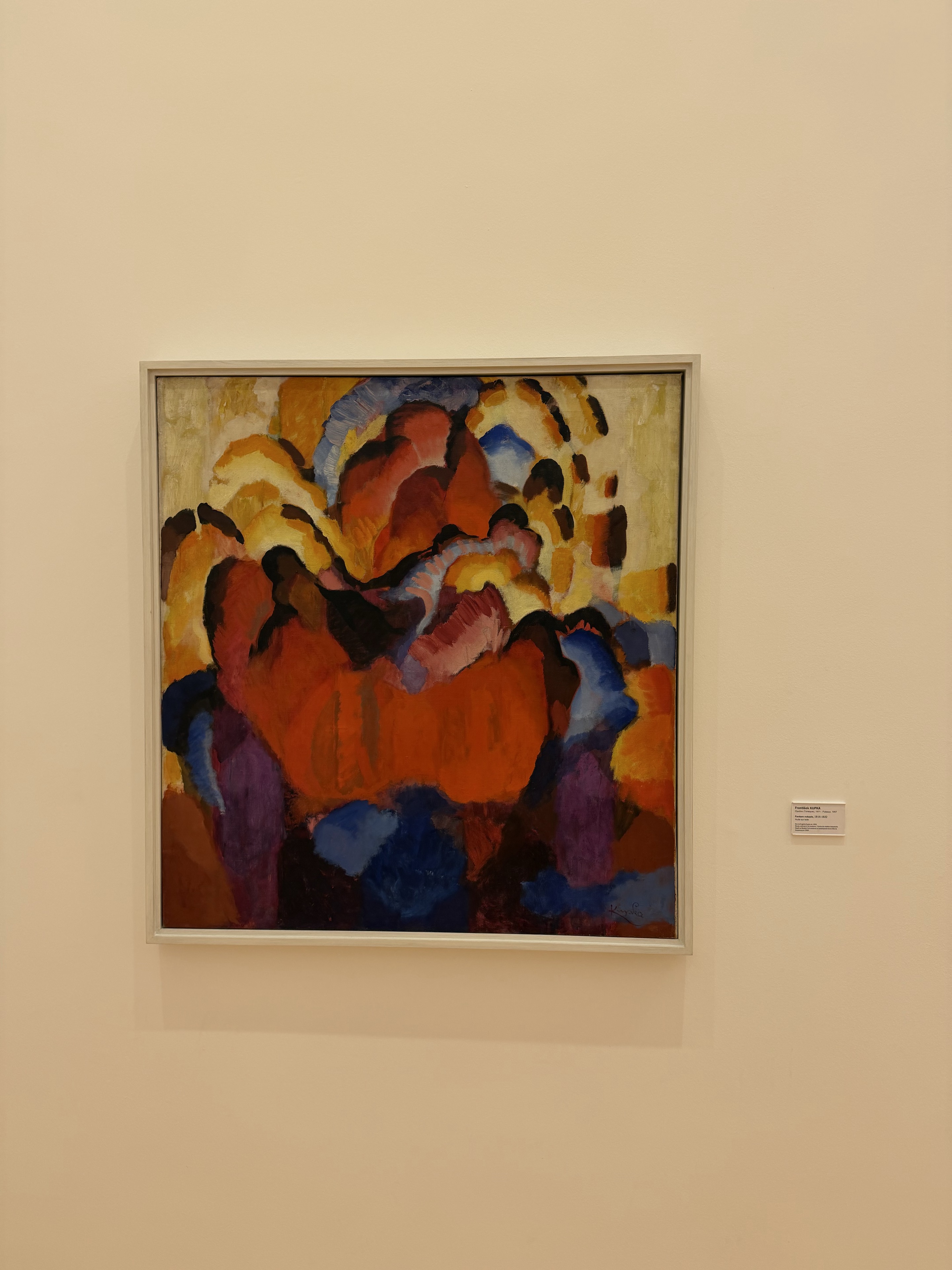
Here the artist no longer begins by finding an object and then trying to paint it. A sensation, force, rhythm or inspiration can be condensed directly into colours and shapes. A line does not have to be the contour of something. A patch of colour does not have to tell us which object it belongs to. These elements can become expression in their own right.
This is also why abstract art is not art that has "painted nothing". It has simply moved the method of key-frame condensation away from recognisable objects and towards relationships themselves. What the picture condenses may no longer be a scene, but the state reached by a set of forces at a particular instant.
A Key Frame Can Also Condense Emotion, Story and Context
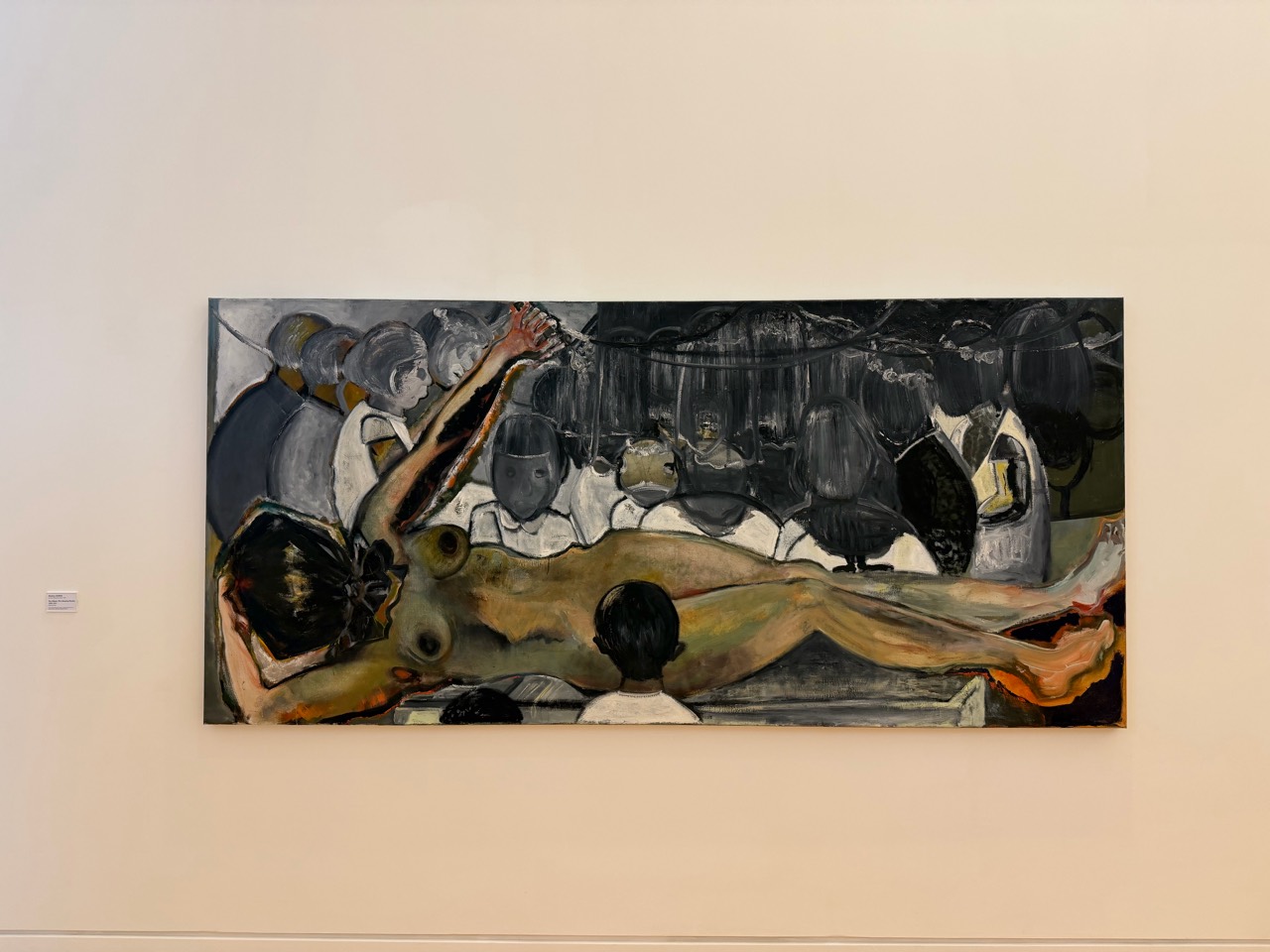
Key frames do not belong only to abstract painting. Whenever an artist moves beyond reproducing reality and brings personal emotion, thought, inspiration and context into the work, the picture can become a condensed form far more complex than the scene from which it began.
In the photograph below, a reclining body, a dense crowd of people, raised arms and a large expanse of black create a sense of pressure. The figures remain recognisable, but this is clearly not a detached record of an event. The body is elongated, faces are hidden, and the movements suggest a ritual, a spectacle, a judgment or some form of collective act. Many emotions that are difficult to separate and name have been compressed into a single picture.
The next painting departs even more clearly from everyday reality. A brick tower, woodland, stairs, fish-like beings and a picture within the picture occupy the same space. Each part appears recognisable, yet the relations among them cannot be explained by the ordinary logic of reality. It resembles a story suddenly stopped halfway through, or a single frame into which the artist has condensed dream, memory, symbol and imagination.
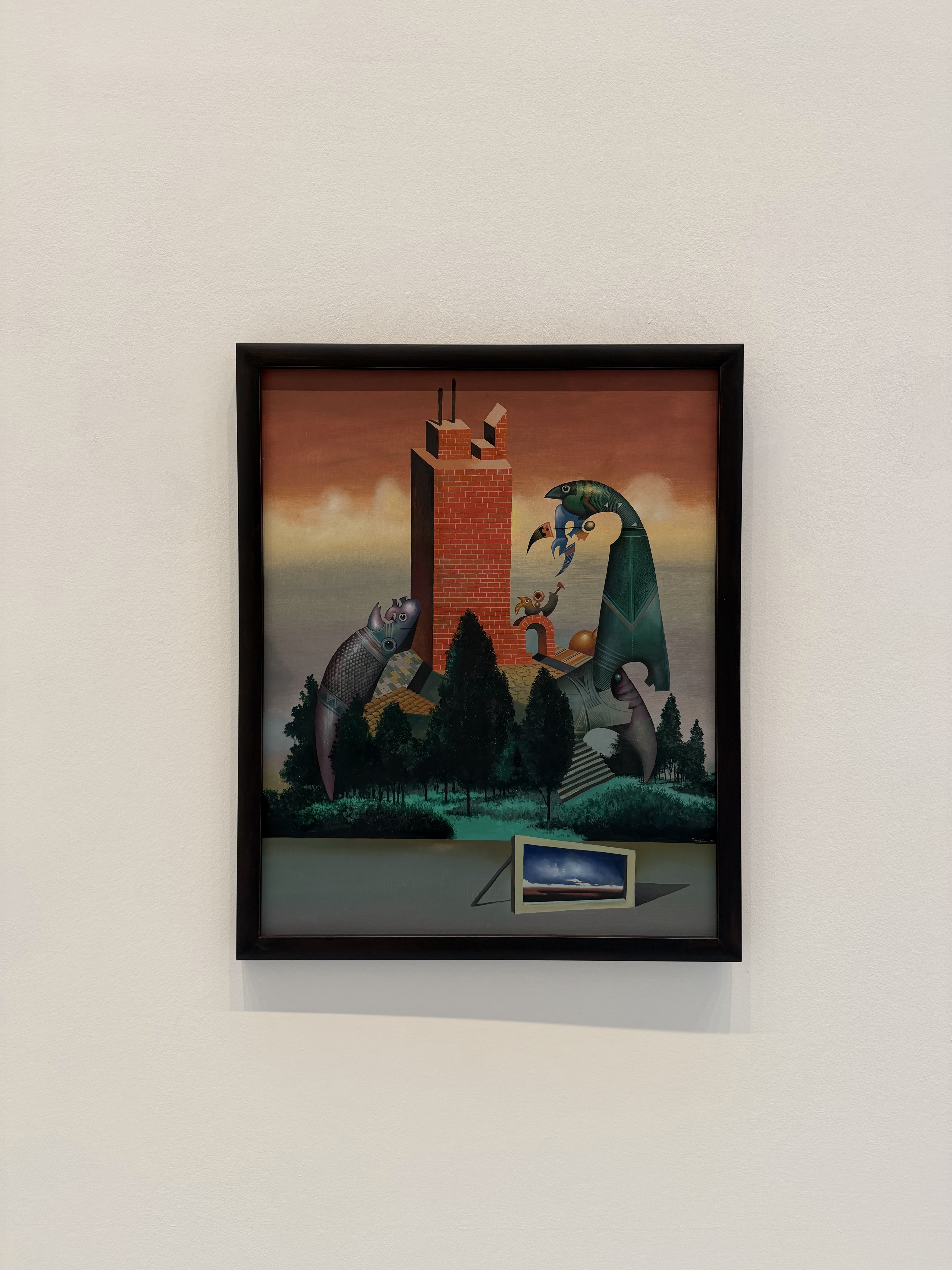
We do not know what happened before this frame or what will happen next. Precisely because the work gives us only a key frame, looking continues from there. The image has stopped, but thought begins to move.
When Material Itself Enters the Key Frame
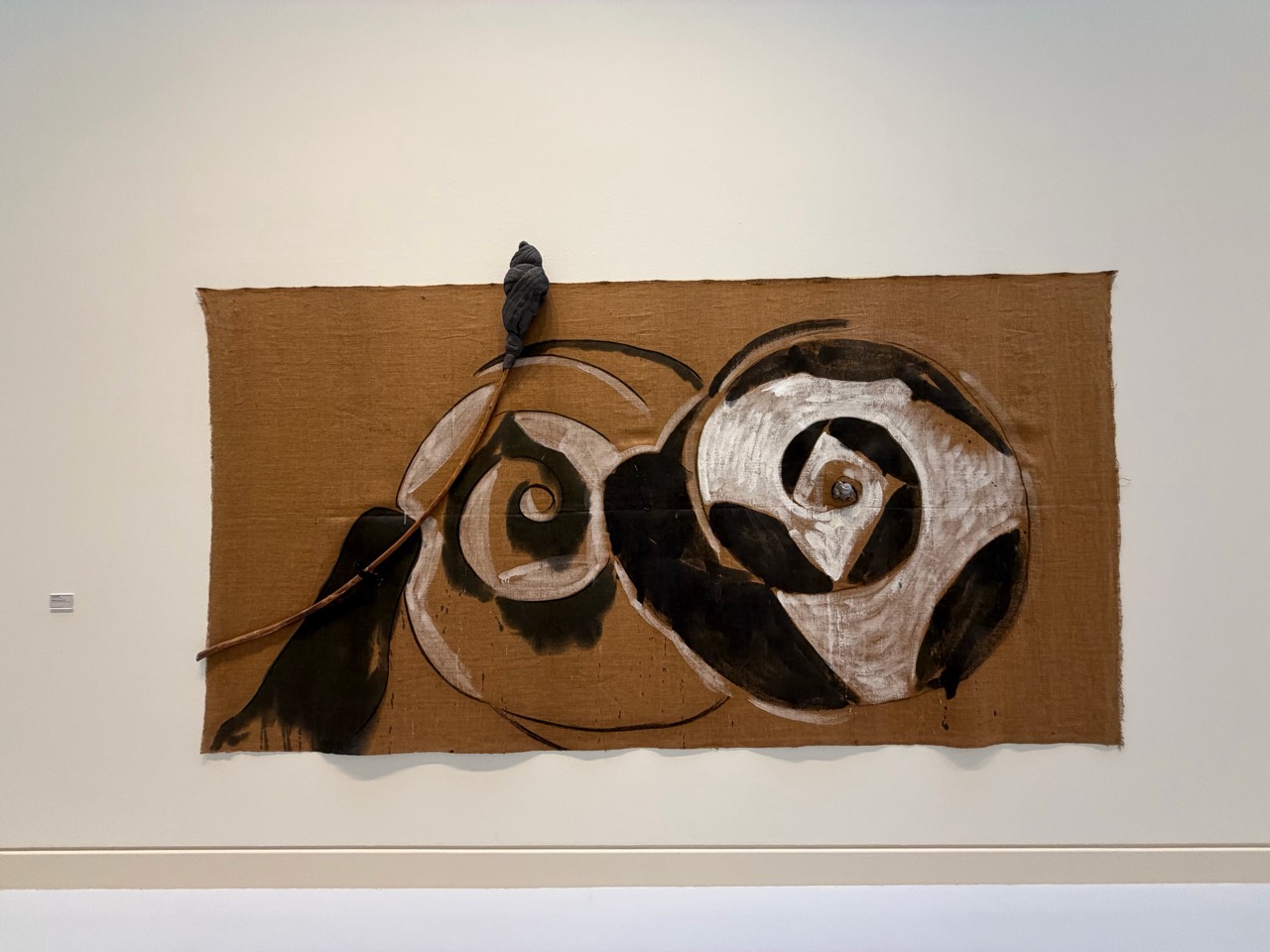
Developments in science, technology and production have also kept expanding the media of art. Artists are no longer restricted to oil paint, watercolour or gouache. Burlap, wood, rope, metal, plastic, found objects and entire spaces can all enter a work.
In the photograph below, the burlap has not been concealed beneath paint. Its coarse fibres and unfinished edges, together with black and white spirals, rope and an object projecting from the surface, all form the work. The burlap is not merely a ground waiting to be covered. Its colour, touch and weight are part of the expression. The rope and wood attached to it are not decorations; they allow the work to break physically out of the plane.
The cartoon installation in the gallery takes this movement into space. A top-hatted cartoon figure extends multiple arms and legs while suspended in the room, and comics cover the wall behind it. Painting, sculpture, comics and exhibition space join together. The key frame we encounter is no longer restricted to the inside of a picture frame. It can be the entire scene that meets our body as we enter the gallery.
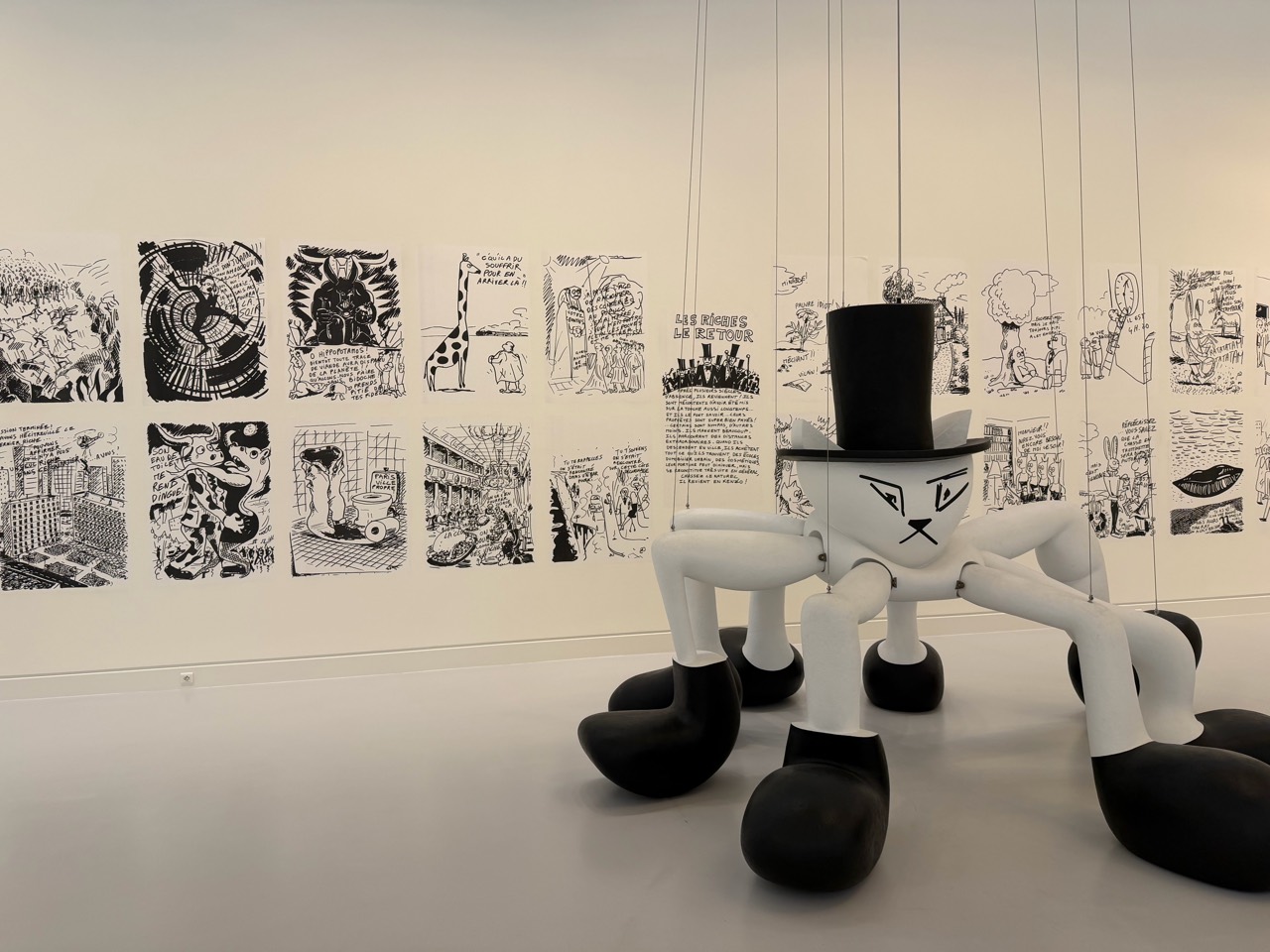
The means of creation keep changing. Canvas can be replaced, paint can be replaced, and even the frame can disappear. Yet whatever material the artist uses, those scattered sensations, ideas, experiences and contexts still have to be organised into a perceptible whole. This is still key-frame condensation.
Through Every Change: Creation as Key-Frame Condensation
From the pursuit of resemblance to the appreciation of brushwork and technique; from the depiction of concrete objects to the independent expression of colours, lines and shapes; from traditional canvas to mixed materials, sculpture and spatial installation, art appears to have changed enormously.
Yet through every change, something fundamental remains.
The artist faces a continuously moving world and a continuously changing inner life. Reality, memory, emotion, religion, history, personal experience, inspiration and the surrounding environment begin as separate things. Creation selects some of them, lets them meet within a limited form, and finally condenses them into a key frame.
The "frame" here does not have to be a literal moment from reality. It can be a landscape, a face or a scene in the middle of a story. It can also be a relationship among colours, the texture of burlap, or a spatial state formed by an entire gallery.
Nor does "key" mean that the work must record the most important event. It means that, through the artist's selection, this has become the frame capable of carrying the expression. The artist cannot give us an entire life, every thought and every feeling. What reaches us is the form into which those things condensed at a particular moment.
Art Is Not a Question, and a Key Frame Has No Standard Answer
If we understand art as a key frame, the way we appreciate it also changes.
We no longer have to treat a painting as a question and rush to find the correct answer hidden behind it. A work transmits information, but it also transmits emotion, sensation, inspiration and context. It does not arrange these things into a problem with only one solution. It simply places a highly condensed key frame before us.
Every viewer can depart from that frame. A person's education, experience, capacity for appreciating art, temperament and even mood at the moment of looking will shape what they see first and where they go from there. One person sees light and air in Monet's field; another sees time disappearing. One feels collision in Kupka's areas of colour; another feels rotation, enclosure or growth. Faced with the coarse burlap, one viewer first thinks about material, while another follows the spirals into a personal memory.
The same key frame can become the origin of many paths of thought. It can create associations, call up memories, change an emotion, or inspire new expression and further creation. The image is physically still, yet it can continue developing in the mind.
This is what I see as a decisive point in the appreciation of art: an artwork is not an answer waiting for us to guess it, but a key frame waiting for us to depart from it.
Once we recognise this, the appreciation of art truly begins.
We no longer ask only whether the work looks realistic. We do not immediately turn away because we cannot identify a concrete object, and we do not hurry to seal the work inside its title and explanatory label. We begin to feel what has been condensed into this frame, through which forms it has been condensed, and what it opens within us.
The artist condenses a moving world into a still key frame. The viewer departs from that frame and sets thought in motion again.
The wonder of art happens between these two movements.